Breathing on Mars: The Invisible Threat Hiding in Every Grain of Red Dust
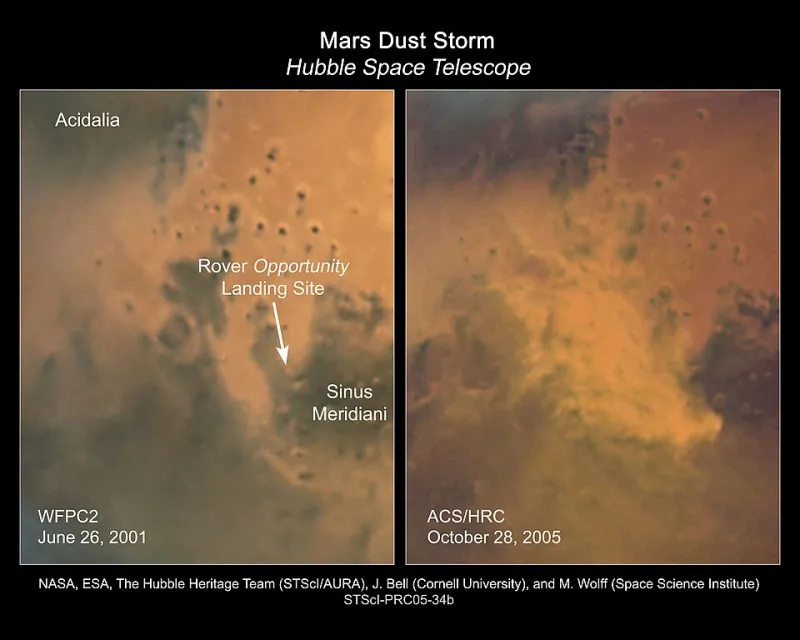
Photo: NASA, ESA, The Hubble Heritage Team (STScI/AURA), J. Bell (Cornell University) and M. Wolff (Space Science Institute), Public domain, via Wikimedia Commons
If you've been following Mars coverage long enough, you've probably seen the photos — those sweeping, amber-tinted landscapes that look almost painterly. Beautiful, right? But here's the thing nobody puts on a poster: that gorgeous rust-colored dust is potentially one of the most dangerous materials a human being could breathe. And as we get closer to actually putting boots on Martian soil, scientists are paying very close attention to what's inside every single grain.
This isn't just a nerdy chemistry sidebar. It's a mission-critical problem that could determine whether long-duration human stays on Mars are even survivable.
What Martian Dust Actually Is (And Why It's Not Like Anything on Earth)
Here on Earth, we deal with dust constantly. Pollen, skin cells, soil particles — annoying, sometimes allergenic, but generally manageable. Martian regolith is a completely different animal.
Mars dust is extraordinarily fine. We're talking particles small enough to stay suspended in the thin Martian atmosphere for months at a time — something we witnessed dramatically during the planet-wide dust storm of 2018 that ultimately ended the Opportunity rover's mission. These particles are jagged at the microscopic level, shaped by billions of years of grinding and radiation rather than the water-based weathering processes that round off Earth's soil particles.
That jaggedness matters enormously for lung tissue. Sharp particles embed differently than smooth ones, and they don't clear as efficiently. Think about the difference between asbestos fibers and beach sand — particle geometry is everything when it comes to respiratory damage.
The Perchlorate Problem
Shape is just the beginning. The chemical composition of Martian dust is where things get genuinely alarming.
Researchers have known for years that Martian soil contains perchlorates — oxidizing salts that are toxic to humans even in small quantities. On Earth, perchlorates are industrial pollutants we actively regulate. On Mars, they occur naturally at concentrations that would be considered a hazmat situation back home. These compounds interfere with thyroid function and, when inhaled or ingested, can cause a cascade of health problems.
A 2018 study published in Nature Geoscience added another layer of concern: when Martian perchlorates are exposed to ultraviolet radiation (which Mars gets plenty of, thanks to its negligible ozone layer), they become dramatically more toxic and capable of destroying bacteria. That's a double-edged finding — it tells us Mars's surface is probably inhospitable to microbial life, but it also tells us that any dust that makes it inside a habitat or suit could be chemically activated and ready to do serious biological damage.
And then there's the silica. Mars has regions rich in amorphous silica, and inhaling fine silica particles is the cause of silicosis — a progressive, incurable lung disease. Miners on Earth have suffered from this for generations. Future Mars settlers might face a version of the same risk just by living there.
How Does It Compare to Lunar Dust?
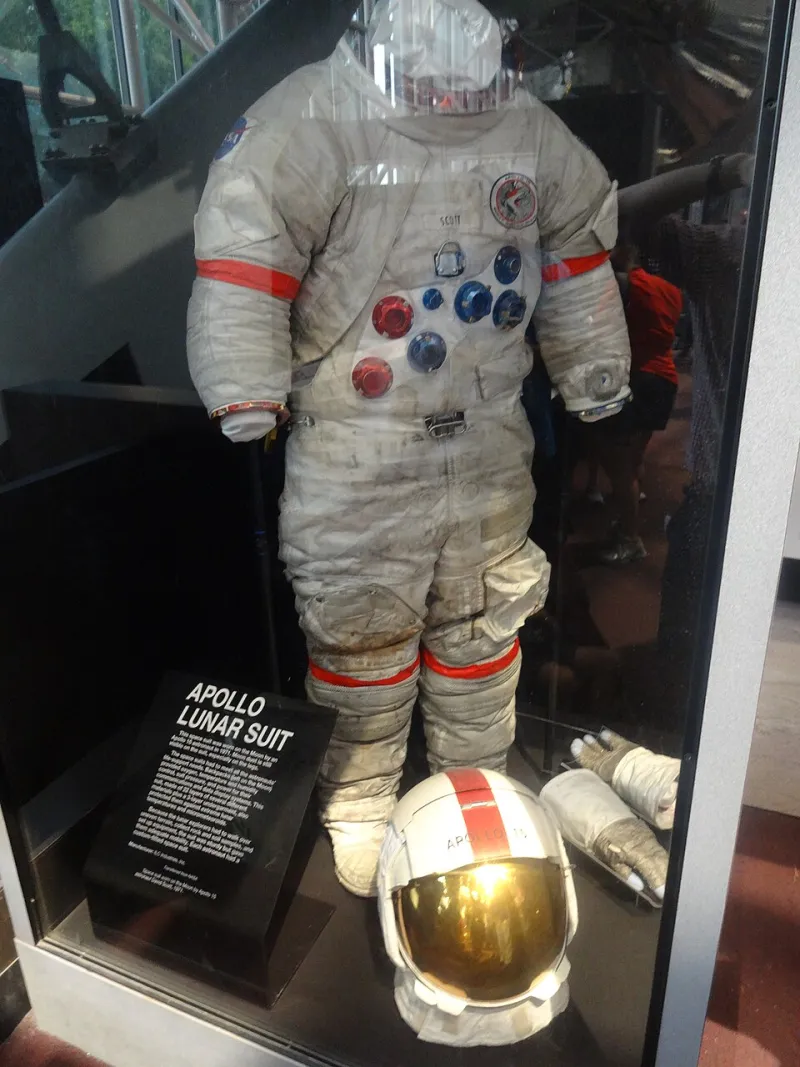
For context, it's worth comparing Mars dust to the lunar variety, since NASA spent a lot of energy on that problem during Apollo. Lunar dust was notoriously clingy and abrasive — astronauts reported it scratching visors, clogging equipment, and irritating nasal passages. Harrison Schmitt, the geologist-astronaut on Apollo 17, developed what he described as "lunar hay fever" after just a few hours of exposure inside the lander.
Mars dust shares some of those mechanical properties but adds the chemical toxicity layer that lunar dust largely lacks. In some ways, that makes it a harder problem to solve. You can design for abrasion. Designing for perchlorates and reactive oxygen species in a long-duration environment is a much taller order.
What Engineers Are Actually Doing About It
Here's where the story gets more hopeful. NASA and a growing number of private-sector partners aren't sitting on their hands.
One major area of development is advanced suit filtration. Current spacesuit designs are being re-evaluated specifically with Martian dust chemistry in mind. The goal isn't just to keep dust out — it's to neutralize the compounds that might hitch a ride in even with the best filtration. Researchers at institutions like the University of Central Florida and Johns Hopkins are working on materials that can chemically bind to perchlorates before they reach breathable air.
Habitat design is also evolving. Concepts for Martian surface habitats increasingly include multi-stage airlock systems — sometimes called "dust lock" protocols — where astronauts would remove and seal outer suit layers before entering a secondary chamber, then proceed through another cleaning stage before entering the main living area. It's similar in concept to how medical cleanrooms work, adapted for the Martian context.
There's also interesting work happening with electrostatic dust removal. NASA's Kennedy Space Center has been developing panels that use electrical charges to repel dust particles — a technology originally aimed at keeping solar panels clean but now being considered for suit surfaces and habitat exteriors.
Why You Should Care Right Now
Okay, so you're probably not suiting up for Mars anytime soon. But this research matters to space enthusiasts for a few reasons beyond pure curiosity.
First, the solutions being developed for Mars dust have real Earth applications. Better filtration technology, safer materials for hazardous environments, improved understanding of how fine particles interact with lung tissue — all of that feeds back into industries and healthcare systems here at home.
Second, dust toxicity is one of the variables that will directly influence mission architecture and timeline. If the problem is harder to solve than anticipated, it could push back crewed missions or limit how long astronauts can operate on the surface. That affects every Mars timeline you've been tracking.
And third — if you're the kind of person who geeks out over the real obstacles standing between humanity and Mars, this is as real as it gets. It's not a rocket equation or a funding gap. It's chemistry and biology and engineering colliding on a planetary scale.
The Red Planet has never looked more complex — or more worth figuring out.
Gear up for your own Mars exploration journey at marspedia.store — from educational resources to space-themed gear for the serious enthusiast.