Grow Like You're on Mars: How Kitchen Hydroponics Connects Backyard Gardeners to the Future of Space Farming
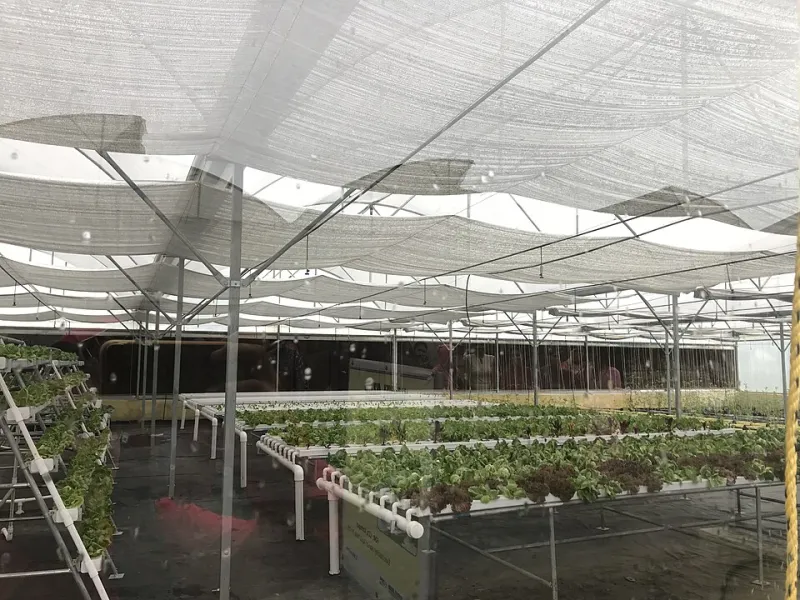
Photo: Just2blabber, CC0, via Wikimedia Commons
Let's be honest — most of us will never set foot on Mars. But the science that's going to keep future colonists alive and fed? You can actually do a version of that in your kitchen this weekend. No rocket required.
Controlled-environment agriculture (CEA) and hydroponics aren't just buzzwords from a sci-fi novel. They're the backbone of NASA's serious planning for long-duration missions, and they're also one of the most accessible DIY hobbies you can pick up as a space enthusiast. Whether you're a gardener curious about growing without soil or a die-hard Mars fan who wants to do something with that passion, this is your on-ramp.
Why Mars Makes Farming So Hard (And So Interesting)
Growing food on Mars isn't a matter of tossing some seeds into the ground and waiting. The Martian surface is brutal: average temperatures around -80°F, atmospheric pressure less than 1% of Earth's, soil loaded with toxic perchlorates, and no liquid water sitting around. Oh, and the radiation levels would make a sunburn seem quaint.
So when NASA researchers and private space companies talk about feeding a Mars colony, they're not imagining open fields under a dome. They're thinking about sealed, highly controlled growing environments where every variable — light, humidity, CO2 levels, nutrient delivery — is managed with precision. That's where hydroponics and related systems like aeroponics and aquaponics come in.
The good news? Those same constraints that make Mars farming a puzzle are exactly what makes experimenting on Earth so rewarding. You're essentially playing the same game, just with Earth-friendly stakes.
What NASA Is Actually Testing
NASA's Vegetable Production System — nicknamed VEGGIE — has already been growing lettuce, radishes, and even flowers aboard the International Space Station. The project uses LED lighting tuned to specific wavelengths that plants absorb most efficiently, along with a pillow-based root mat system that delivers water and nutrients directly to the roots.
More recently, the Advanced Plant Habitat (APH) on the ISS has taken things further, running automated experiments with wheat and arabidopsis (a plant scientists love because it grows fast and is easy to study). The goal is to understand how microgravity and space radiation affect plant biology — knowledge that will directly translate to Martian greenhouse design.
For Mars specifically, researchers are looking hard at crops that give you the most nutritional bang for your growing-space buck. Potatoes (yes, The Martian wasn't totally off-base), sweet potatoes, leafy greens, soybeans, and certain root vegetables keep coming up in the literature. These crops are calorie-dense, fast-growing, or both.
Building Your Own Mars-Inspired Growing System
Here's where it gets fun. You don't need a $500 grow tent setup to start learning the principles behind space farming. Start small and scale up as your curiosity grows.
The Mason Jar Kratky Method
The Kratky method is the simplest possible hydroponics system — no pumps, no electricity, no moving parts. You fill a mason jar with nutrient solution, suspend a net pot with a seedling in the lid, and let the roots dangle into the water. As the plant drinks, an air gap forms naturally, giving roots the oxygen they need.
This is a great way to grow lettuce, herbs, or spinach on a windowsill. It's also a perfect analog for thinking about passive water delivery systems in a low-power Mars environment where energy is precious.
What you'll need:
- Wide-mouth mason jar (quart size works great)
- Net cup that fits the jar opening
- Hydroponic nutrient solution (MaxiGro or General Hydroponics Flora Series are popular US brands)
- Rockwool or clay pebble growing medium
- Seeds (lettuce varieties like Buttercrunch or Black Seeded Simpson do well)
Mix your nutrients per the label, fill the jar, drop in your seeded net cup, and find a sunny window. You'll see results in days.
Stepping Up: A Simple NFT Channel
Nutrient Film Technique (NFT) is what a lot of commercial hydroponic operations use — a thin film of nutrient solution flows continuously over plant roots sitting in a sloped channel. This is closer to what a real Mars greenhouse might use, since it's water-efficient and scalable.
You can build a basic NFT system for under $100 using PVC pipe from Home Depot, a small submersible pump, a reservoir tub, and a timer. Plenty of YouTube tutorials walk through the build, and the learning curve is gentle.
The key Mars-relevant lesson here is water efficiency. On Mars, every drop of water is a precious resource, either extracted from subsurface ice or recycled from the habitat's life support system. NFT systems use a fraction of the water that soil gardening does, and they recirculate what isn't absorbed. That closed-loop thinking is exactly the mindset future Mars farmers will need.
Light Is Everything
Mars receives about 43% of the sunlight Earth does, and a pressurized greenhouse would filter even more. That means artificial lighting isn't optional — it's essential. For your Earth setup, full-spectrum LED grow lights are cheap, efficient, and let you experiment with light schedules.
Try running an 18/6 cycle (18 hours light, 6 hours dark) for leafy greens and see how it compares to a 12/12 cycle. You're essentially doing the same empirical testing that plant biologists are running on the ISS.
The Bigger Picture (And Why It Matters to You)
Every time you dial in a nutrient solution or figure out why your lettuce is bolting under the wrong light spectrum, you're building intuition about systems that genuinely matter to the future of human spaceflight. Mars colonization isn't going to be solved by engineers alone — it's going to require people who understand biology, agriculture, and closed-loop resource management.
And honestly? Homegrown hydroponic salad tastes incredible. That's reason enough.
If you want to go deeper, check out the resources NASA's Open Science Data Repository has made public around plant growth experiments. The raw data from ISS plant studies is genuinely accessible, and reading through it with your own growing experiments as context hits differently than just reading a summary article.
Gear Up for Your Mars Garden
At Marspedia, we love the idea that space enthusiasm doesn't have to stay theoretical. Whether you're picking up a starter hydroponics kit, a Mars mission poster to hang above your grow setup, or a copy of a space botany field guide, there are real ways to make your Mars fandom hands-on.
Start with a jar of lettuce seeds and a mason jar. In two weeks, you'll be eating your first Mars-style harvest — and thinking about the Red Planet a little differently every time you do.