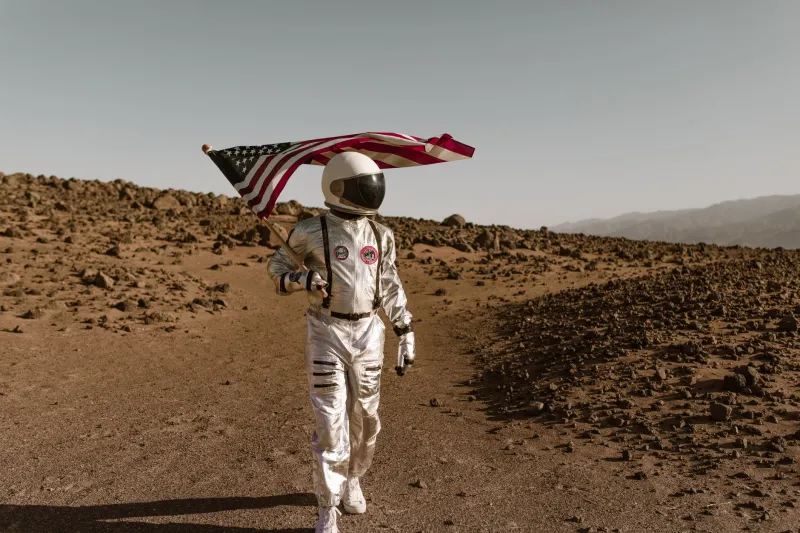
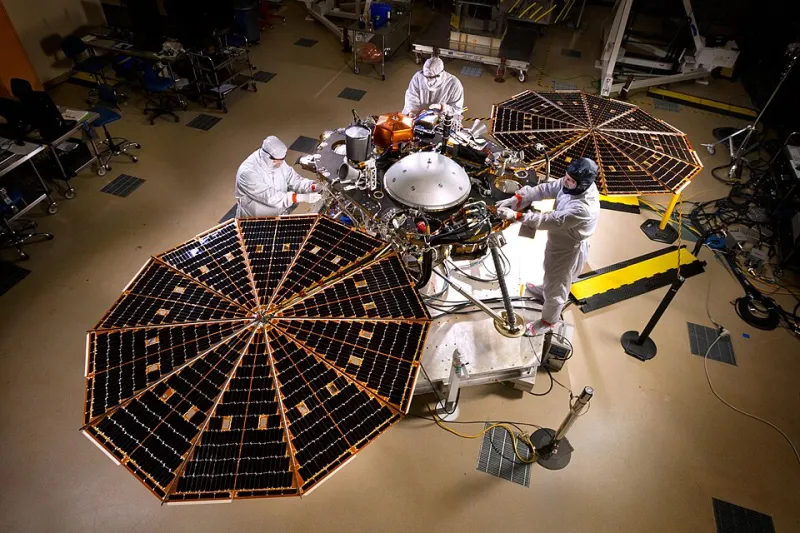
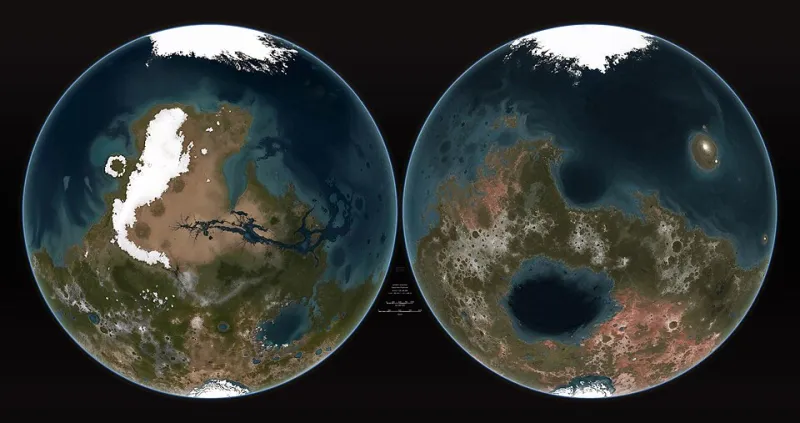
Why Are We Planning Mars Cities While Antarctica Sits Half-Empty?
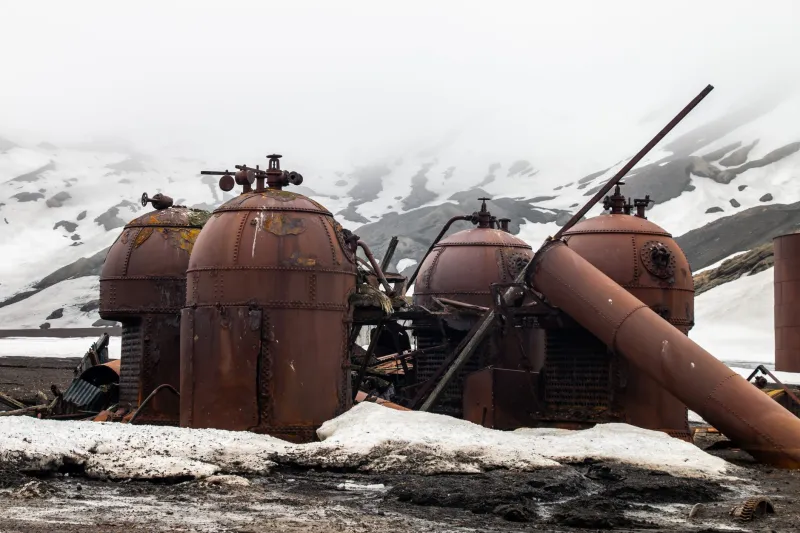
Here's a thought experiment that tends to make people uncomfortable at dinner parties: if you genuinely want to stress-test human survival in a cold, radiation-exposed, resource-scarce environment, Antarctica is right there. It's a 17-hour flight from Los Angeles, not a nine-month one-way trip through the void. The pressure suits are optional. The air is free.
And yet, as of right now, the permanent human population of Antarctica is zero. The rotating research staff at places like McMurdo Station peaks around 1,000 people in summer. Meanwhile, concept artists are rendering underground Martian cities, venture capitalists are pitching Mars real estate, and the phrase "multi-planetary species" gets dropped in keynote speeches like it's practically on the calendar.
So what's actually going on here? Why does a planet 140 million miles away feel more colonizable—more worth colonizing—than the places on Earth we already know are survivable?
The Novelty Premium
Part of the answer is embarrassingly simple: Mars is new. Antarctica has been mapped. We know its coastlines, its ice shelves, its seasonal rhythms. There's no mystery left to project onto it, no blank canvas for the imagination. Mars, by contrast, still has corners we haven't photographed, chemistry we're still decoding, and a history that might include life. The unknown is a powerful motivator, and Mars has it in abundance.
Psychologists who study exploration motivation talk about something called the "frontier effect"—the idea that humans aren't just drawn to challenge, they're drawn to first challenges. Being the thousandth person to overwinter in Antarctica feels like logistics. Being among the first hundred humans to set foot on Mars feels like legend. That distinction matters more than we usually admit when we're talking about policy and funding.
But here's the uncomfortable flip side: that same novelty premium means we're making settlement decisions based on narrative appeal rather than practical return. The deep ocean floor contains mineral deposits, biological systems we barely understand, and potential pharmaceutical compounds. The Atacama Desert in Chile is so Mars-like that NASA uses it to test rover instruments. Neither gets a fraction of the cultural oxygen that Mars does.
Risk Tolerance Gets Weird When the Stakes Are Cosmic
There's another paradox buried in our Mars obsession, and it has to do with how we calibrate risk. Ask most Americans whether they'd support a government program to permanently settle a remote Antarctic plateau—one that would cost billions, require volunteers to endure extreme isolation, and might result in deaths—and the political reaction would be swift and skeptical. Congressional hearings, op-eds, the whole apparatus of public outrage.
Propose the same thing for Mars, and suddenly the risk calculus shifts. Somehow the greater danger, the greater cost, and the near-total impossibility of rescue make it more acceptable, not less. We romanticize the astronaut's sacrifice in a way we'd never romanticize an Antarctic researcher's. Part of that is the cosmic stakes argument—the idea that becoming multi-planetary is an existential insurance policy for the human species. But part of it is just that space has better branding.
This isn't a knock on Mars exploration. It's worth doing, and the science coming back from Perseverance and Ingenuity alone justifies serious investment. The issue is whether the settlement conversation is being driven by genuine strategic thinking or by the fact that Mars makes for a better movie poster.
What Earth's Hard Places Could Actually Teach Us
Here's where this stops being abstract and starts mattering practically. Every challenge engineers are trying to solve for Mars habitats—closed-loop life support, psychological resilience in isolated crews, food production under resource constraints, radiation shielding—has an analog on Earth where we could test solutions faster, cheaper, and with much lower mortality risk.
Deep-sea habitats like the old Aquarius station off Florida's coast ran continuous human occupation experiments that directly informed space station design. Antarctic bases have produced some of the most rigorous research on long-duration crew psychology ever conducted. The problem isn't that these environments can't teach us things. The problem is that they're not glamorous enough to attract the funding that glamour unlocks.
If the Mars colonization community is serious—and many of them genuinely are—then a stronger investment in Earth analog environments isn't a detour from the goal. It's the fastest road to it. You can iterate on a habitat design in the Atacama in weeks. On Mars, a design flaw is a eulogy.
The Funding Conversation Nobody Wants to Have
NASA's budget is a political document as much as a scientific one, and right now the Mars narrative is one of its most powerful lobbying tools. That's not cynical—it's just true. Public enthusiasm for Mars exploration helps protect science funding in budget cycles that would otherwise gut it. The drama of a crewed Mars mission keeps space on the front page in a way that an improved Antarctic research station simply doesn't.
But there's a real cost to letting the story wag the science. Earth's extreme environments are underfunded, understudied, and in some cases actively degrading—Antarctic ice cores that represent irreplaceable climate data are disappearing as the continent warms. Deep-sea ecosystems are being disrupted before we've catalogued them. If even a fraction of the intellectual energy aimed at Mars habitat design were redirected toward understanding and sustainably occupying Earth's hard places, the returns—scientific, practical, and economic—would be enormous.
This isn't an either/or argument. It's a proportion argument. We can want Mars and also want a serious, funded program to understand what human habitation looks like in Earth's most demanding corners.
So What Does This Say About Us?
Maybe the Mars obsession is ultimately a story about aspiration outrunning patience. Settling Antarctica permanently would require decades of incremental, unglamorous work—building infrastructure, negotiating international treaties, solving supply chain problems that don't make for compelling launch-day livestreams. Mars lets us skip straight to the mythic part. It lets us be explorers in the old romantic sense, not administrators.
That impulse isn't wrong. It's deeply, recognizably human. But if we're going to be honest about building a future on Mars—really honest, not just render-farm honest—we have to reckon with the fact that we haven't finished the homework planet we're already standing on.
The Red Planet will still be there. It's been waiting 4.5 billion years. A few more decades of doing the hard, boring, necessary work closer to home isn't retreat. It's preparation.
And if you ask us, preparation is what separates the missions that make history from the ones that become cautionary tales.