A Piece of Mars on Your Bookshelf: The Collector's Honest Guide to Buying and Understanding Martian Meteorites
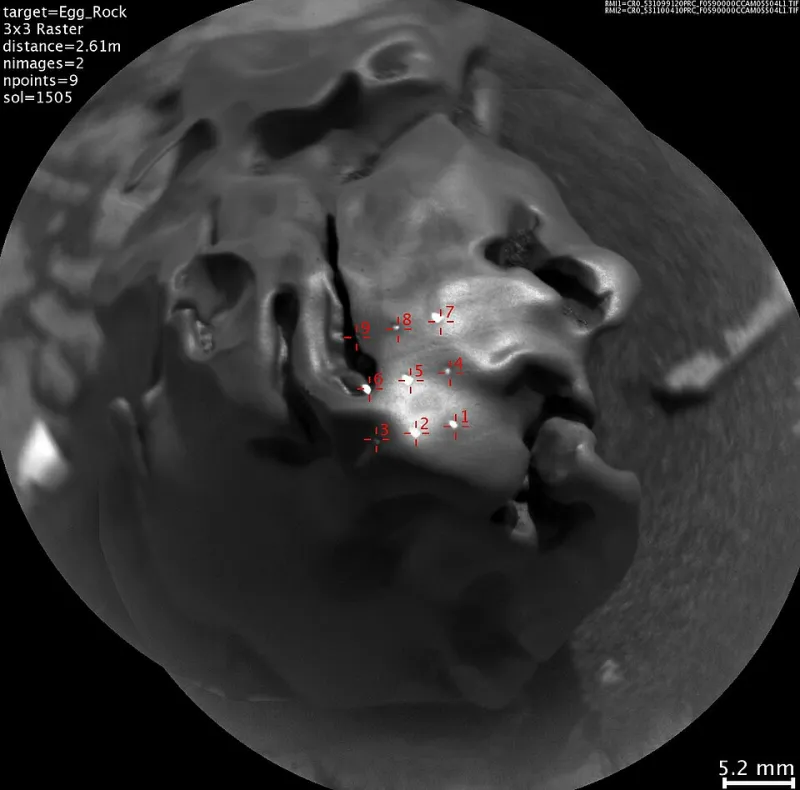
Photo: NASA/JPL-Caltech/LANL/CNES/IRAP/LPGNantes/CNRS/IAS/MSSS, Public domain, via Wikimedia Commons
There are roughly 300 confirmed Martian meteorites on the entire planet. For context, that's fewer than the number of people who've run a sub-four-minute mile. These rocks — blasted off Mars by ancient asteroid impacts, wandering through space for millions of years, and eventually burning through Earth's atmosphere — are the closest most of us will ever get to holding another world in our hands.
And here's the part that surprises most people: you can actually own one.
Not a cast replica. Not a museum print. A certified, scientifically authenticated fragment of Mars — the kind of thing that would make any space enthusiast's jaw drop when they realize what's sitting on their shelf. But the market for meteorites is complicated, occasionally shady, and full of traps for the uninformed buyer. Let's sort it out.
How a Rock Gets From Mars to Your Living Room
The journey is almost absurdly dramatic. A large asteroid or comet smashes into Mars with enough force to eject surface material at escape velocity — roughly 11,000 mph. Those rocks drift through the solar system for anywhere from a few hundred thousand to tens of millions of years before Earth's gravity pulls them in. Most burn up completely. A small fraction survive as meteorites.
They're found mostly in places where dark rocks stand out against a pale background — Antarctica and the Sahara Desert are the two biggest sources. Antarctic specimens are collected by government-sponsored scientific expeditions (US, Japanese, and European programs), and those samples belong to the countries that found them; they're not for sale. But meteorites found in the Sahara and other desert regions by private hunters can be legally bought and sold on the open market.
That legal distinction matters a lot, and we'll come back to it.
What Makes a Meteorite "Martian"?
Scientists confirm a meteorite's Martian origin through a combination of chemical and isotopic analysis. The smoking gun is trapped gas — tiny pockets of gas locked inside the rock that match the exact composition of Mars's atmosphere as measured by the Viking landers in the 1970s. That atmospheric fingerprint is unique enough that when it shows up in a meteorite, the case is essentially closed.
All confirmed Martian meteorites fall into a group called the SNC meteorites (named after Shergotty, Nakhla, and Chassigny, three historically significant finds). They include:
- Shergottites — the most common type, usually basaltic volcanic rocks
- Nakhlites — clinopyroxene-rich rocks that formed from slowly cooling magma
- Chassignites — rare dunite rocks, only two known examples
- Orthopyroxenite — a single specimen, ALH84001, which famously sparked the 1996 announcement about possible ancient microbial life on Mars
Each type tells a different story about Mars's geological history, and owning a fragment means you're holding a literal chapter of that story.
The Market: Where to Buy Without Getting Burned
This is where a lot of enthusiastic collectors go wrong. The meteorite market is real, legitimate, and thriving — but it also has its share of fakes, misidentified rocks, and overpriced "slices" that don't represent good value.
Reputable US dealers are your safest starting point. Look for members of the International Meteorite Collectors Association (IMCA), which has a code of ethics and a verification system. Dealers like Aerolite Meteorites (based in Arizona), Blaine Reed Meteorites (Colorado), and established auction houses like Heritage Auctions have solid track records and will provide documentation with any purchase.
For Martian meteorites specifically, expect to pay between $1 and $50 per gram depending on the type and quality. Shergottites are the most affordable. A small fragment of a few grams — enough to be genuinely impressive and scientifically meaningful — might run you $50 to $200. Museum-quality slices showing interior crystalline structure cost considerably more.
eBay exists, and yes, Martian meteorites do appear there. Some listings are legitimate. Many are not. If you go this route, only buy from sellers with IMCA membership listed in their profile, and cross-reference any claimed classification with the Meteoritical Bulletin Database — a free, publicly searchable registry maintained by the Meteoritical Society that lists every officially classified meteorite on Earth.
Gem and mineral shows — the big ones like the Tucson Gem & Mineral Show in February — are excellent places to handle specimens before buying and talk directly to dealers. For serious collectors, Tucson is basically the Super Bowl of the rocks-and-minerals world.
Reading the Rock: What Your Meteorite Is Telling You
Owning a Martian meteorite isn't just a flex — it's a genuinely educational object. Here's a quick breakdown of what the science inside these rocks reveals:
Volcanic history: Most Martian meteorites formed from volcanic activity that happened between 150 million and 600 million years ago. That's relatively young in geological terms, confirming that Mars was volcanically active far more recently than scientists once believed.
Water interaction: Many specimens show signs of aqueous alteration — minerals that only form when liquid water is present. The nakhlites, in particular, contain carbonate and clay minerals that are clear evidence of Mars once having water moving through its crust.
Magnetic fields: Mars no longer has a global magnetic field, but some meteorites carry remnant magnetism from an era when it did. This data helps scientists reconstruct the timeline of when Mars lost its protective magnetic shield — a loss that likely contributed to the stripping of its atmosphere.
The ALH84001 question: This is the famous one. Found in Antarctica in 1984 and announced to the world in 1996, ALH84001 appeared to contain microscopic structures that some NASA scientists interpreted as possible fossilized bacteria. The scientific community has debated it ever since — the consensus today is skeptical, but not entirely closed. It's a reminder that these rocks are still generating legitimate scientific controversy.
Starting Your Collection Responsibly
A few principles that experienced collectors swear by:
- Always ask for documentation. A reputable seller will provide the official classification name (e.g., "Tissint" or "NWA 7034") that you can verify in the Meteoritical Bulletin Database.
- Buy small and real over large and suspect. A tiny authenticated fragment beats a big rock with questionable provenance every time.
- Store properly. Martian meteorites are sensitive to humidity. Keep them in airtight containers with silica gel desiccant packets. Museum-quality acrylic display cases are affordable on Amazon and look great.
- Learn the legal landscape. US law allows private ownership of meteorites found on private land or purchased through legitimate international markets. Meteorites found on federal land in the US belong to the government. Know the difference.
The Policy Angle Worth Thinking About
Here's something that doesn't get discussed enough in collector circles: as NASA and private companies move toward returning actual Mars samples — the Mars Sample Return mission has been in development for years, though its future is currently uncertain due to budget pressures — questions about ownership, access, and commercialization of Martian material are going to get more complicated.
Right now, naturally occurring meteorites exist in a relatively clear legal space. But what happens when engineered samples arrive? Who owns them? Can they be sold? The answers will shape the future of both science and collecting in ways we haven't fully worked out yet. It's a policy conversation that space enthusiasts should be paying attention to.
Your Mars Collection Starts Today
You don't need a museum budget to own a piece of another planet. A verified Martian meteorite fragment, properly documented and beautifully displayed, is one of the most extraordinary objects a space enthusiast can own — and one of the best conversation starters in any room.
At Marspedia, we think the line between learning about Mars and actually engaging with it should be as thin as possible. Picking up a fragment of the Red Planet is about as direct as it gets.