Mars Is a Time Machine — And What It's Showing Us About Earth's Future Is Alarming
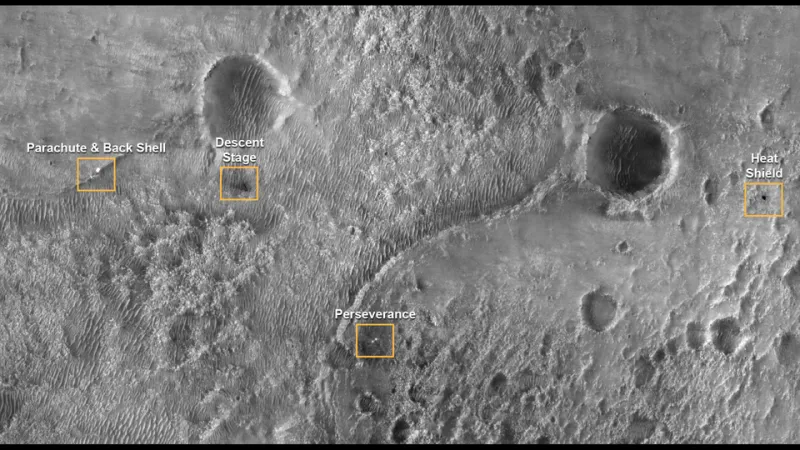
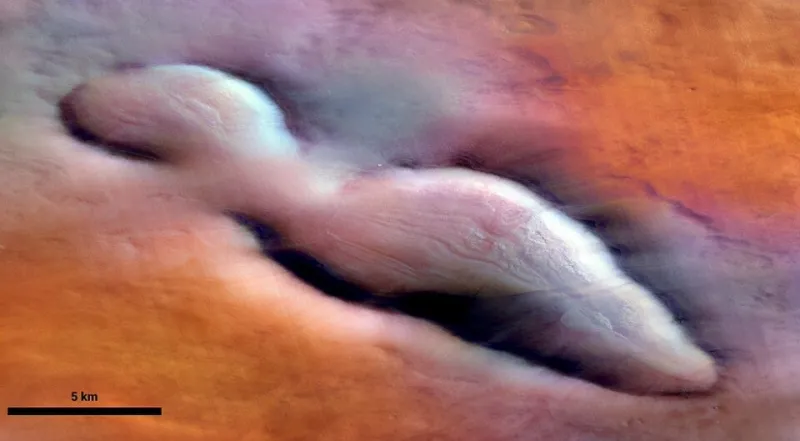
Photo: NASA/JPL-Caltech/University of Arizona, Public domain, via Wikimedia Commons
Let's get one thing out of the way up front: this isn't an article about colonizing Mars to escape a dying Earth. That narrative, as cinematic as it is, misses something far more important. The real value of studying Mars isn't as a backup planet — it's as a warning system. A four-billion-year-old record of what happens when a planet's climate goes catastrophically, irreversibly wrong.
And right now, geologists and planetary scientists are reading that record more clearly than ever before.
A Planet That Used to Look a Lot Like Home
About 3.5 to 4 billion years ago, Mars was a genuinely different place. Liquid water flowed across its surface — not just briefly, but for long enough to carve river deltas, fill lake basins, and potentially support the chemistry that precedes life. The atmosphere was thick enough to sustain that water. The planet was warm enough to make it possible.
Then something went wrong. The magnetic field collapsed. The solar wind began stripping the atmosphere away, molecule by molecule. Temperatures plummeted. The water froze or escaped into space. Within a few hundred million years — fast, in geological terms — Mars became the barren, rust-colored desert we see today.
That transition is one of the most dramatic climate shifts in the known history of our solar system. And scientists studying it aren't just satisfying academic curiosity. They're building a detailed case study in planetary habitability — one with direct implications for the only other planet we know of that's currently habitable.
Reading Rocks Like Climate Reports
The Perseverance rover, currently crawling through Jezero Crater, is doing something remarkable: it's reading Mars's geological record like a stack of old climate reports. The minerals it finds, the way rock layers are deposited, the chemical signatures preserved in ancient sediments — all of it tells a story about what conditions were like when those rocks formed.
Phyllosilicates, for example — clay minerals that Perseverance has been finding in abundance — only form in the presence of liquid water. Carbonates suggest a CO2-rich atmosphere interacting with liquid water. Sulfates point to a later, more acidic, drier period. Together, these mineral sequences let scientists reconstruct Mars's climate history with increasing precision.
What they're finding is sobering. The transition from wet to dry on Mars wasn't a single dramatic event. It was a cascading series of feedback loops — each one making the next more severe. The loss of the magnetic field accelerated atmospheric stripping. Atmospheric loss lowered temperatures. Lower temperatures reduced the water cycle. A reduced water cycle changed surface chemistry. And so on, until the planet was locked into its current frozen state.
Climate scientists on Earth recognize that pattern. Feedback loops — reinforcing cycles that amplify initial changes — are central to modern climate modeling. Studying how they played out on Mars gives researchers a real-world example of planetary-scale feedback dynamics that no Earth-based dataset can provide.
The Magnetic Field Problem
One of the most haunting aspects of Mars's story is the magnetic field. Earth's magnetic field is generated by the churning of molten iron in our planet's outer core. It acts as a shield, deflecting the solar wind and protecting our atmosphere. Mars had a similar field early in its history — we can see the remnant magnetic signatures fossilized in ancient rocks. Then the core cooled, the dynamo stopped, and the shield went down.
Without that protection, the solar wind — a constant stream of charged particles from the Sun — began eroding the Martian atmosphere directly. NASA's MAVEN spacecraft has been measuring this process in real time, and the numbers are striking. Mars loses roughly 100 grams of atmosphere per second to solar wind stripping. Over billions of years, that adds up to most of an atmosphere.
Earth's core is still active, still generating our protective field. But it's not static. The magnetic field has weakened by about 9% over the last 170 years — a fact that generates both legitimate scientific interest and a fair amount of breathless media coverage. Most researchers aren't panicking, but they are paying attention. Mars is what happens when the field goes away entirely. That's a useful data point.
Why This Justifies Every Dollar We Spend on Mars Science
Here's where this becomes a policy argument, and it's one worth making plainly: investment in Mars science is investment in Earth's survival.
This isn't hyperbole. The climate models we use to project Earth's future are built on physics that we test and validate against real planetary examples. Venus shows us runaway greenhouse warming. Mars shows us atmospheric collapse and the consequences of magnetic field loss. Every rover we land, every sample we analyze, every orbital measurement we take adds data points to our understanding of how planetary climates work and fail.
The 2025 federal budget debates around NASA's Mars Sample Return mission were painful to watch for anyone who follows this space. The mission — designed to bring Martian rock samples back to Earth for analysis — has faced cost overruns and political pushback. Some of that criticism is fair. Some of it reflects a fundamental misunderstanding of what's at stake.
The rocks Perseverance is collecting aren't just scientifically interesting. They're potentially the most detailed climate archive we've ever had access to from another world. Analyzing them in Earth-based labs, with the full suite of instruments available to modern geochemistry, could tell us things about planetary climate transitions that we simply cannot learn any other way.
Cutting that mission to save money is a bit like canceling a medical study because the patients aren't showing symptoms yet.
What You Can Do
If you've made it this far, you're probably already the kind of person who thinks Mars matters. Here's the thing: that perspective needs to be louder in public discourse.
Follow the science. NASA's Mars Exploration Program publishes regular updates that are genuinely accessible to non-specialists. Share them. Talk about them. When Mars science comes up in budget debates — and it will — be the person in the room who understands why it's not just about exploration for exploration's sake.
And if you want to go deeper, there's no shortage of resources. The Planetary Society is one of the best advocacy organizations for space science funding in the US. Their work on Capitol Hill directly affects what missions get funded and which ones get shelved.
Mars isn't just a destination. It's a mirror — and right now, it's showing us something we really need to see.