Two Planets, One Crisis: The Uncomfortable Truth About Why We're Terraforming Mars Before We've Saved Earth
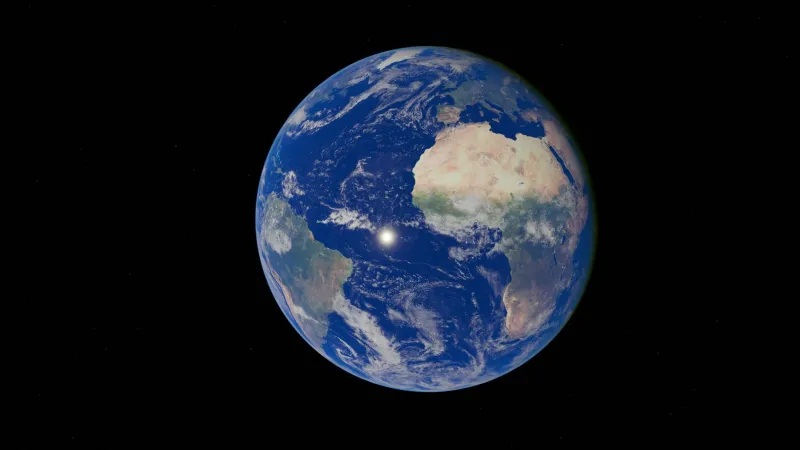
Let's start with the numbers, because the numbers are genuinely staggering. Estimates for a full-scale Mars colonization program — the kind that actually moves the needle on human survival — run anywhere from $500 billion to several trillion dollars over the coming decades. Meanwhile, the UN Environment Programme has repeatedly noted that the entire annual funding gap for global biodiversity protection sits somewhere around $700 billion. Protecting every major ecosystem on Earth. For roughly the same price tag as getting a few thousand humans to a planet where the average surface temperature hovers around -80°F.
That's the Mars colony paradox in a single paragraph. And it doesn't get less uncomfortable the longer you sit with it.
The "Backup Planet" Pitch — And Why It's Compelling
To be fair to the pro-Mars crowd, the backup-planet argument isn't stupid. It's actually pretty hard to dismiss outright. The logic goes like this: every civilization that has ever existed on Earth has been one bad rock from space, one supervolcano, or one rogue pandemic away from extinction. Keeping all of humanity on a single planet is, from a purely actuarial standpoint, a catastrophic risk management failure.
Elon Musk has made this case loudly and repeatedly. So has Jeff Bezos, in slightly different framing. Plenty of serious aerospace engineers and astrobiologists agree with the core premise — that a multi-planetary species is a more durable species. When you frame it that way, spending big on Mars starts to look less like escapism and more like the most rational long-term insurance policy imaginable.
And honestly? That framing has real power. It's part of why Mars colonization captures the imagination in ways that, say, wetland restoration funding drives simply don't.
Where the Logic Gets Slippery
Here's where things get philosophically wobbly, though. The asteroid-impact and supervolcano scenarios that justify a Mars backup are genuinely low-probability events on any human-relevant timescale. The ecological crises unfolding on Earth right now — accelerating species loss, freshwater depletion, soil degradation, ocean acidification — are not low-probability. They're current events.
Climate scientists will tell you, often with visible frustration, that the threats most likely to destabilize human civilization within the next century are already in motion. They don't require a cosmic accident. They require us to keep doing more or less what we're doing.
So the backup-planet logic has a weird inversion at its center: we're preparing for the unlikely catastrophe while arguably under-resourcing our response to the likely one. It's a little like buying a second house in another state as a hurricane backup while neglecting to fix the roof on the one you're actually living in.
Are Space Entrepreneurs Really Ducking the Hard Work?
It would be easy — and a little lazy — to frame this purely as billionaires fleeing a burning Earth for a shiny new frontier. That narrative is emotionally satisfying but probably too simple.
Many of the engineers and scientists working on Mars missions are genuinely motivated by species-level survival instincts, not personal escape fantasies. And the technologies being developed for Mars — closed-loop life support, advanced water recycling, renewable energy systems, synthetic food production — have real terrestrial applications. Some of the most promising work in sustainable agriculture draws directly from research into growing food in sealed Martian habitats.
But there's a legitimate ethical critique that doesn't require bad faith on anyone's part. The resources, talent, and public attention flowing toward Mars are finite. Every brilliant aerospace engineer working on Martian habitat design is an engineer who isn't working on carbon capture or coastal flood resilience. Every dollar of private capital chasing a Mars mission is a dollar not funding grid-scale energy storage or ocean cleanup tech. Opportunity costs are real, even when everyone involved has good intentions.
The Stewardship Question Nobody Wants to Answer
Philosophers and ethicists who study long-term human futures tend to push back on the binary framing — Mars versus Earth — as a false choice. They're not wrong that it's theoretically possible to do both. But they're sometimes too quick to dismiss the practical resource competition.
The deeper question they raise is actually more interesting anyway: what does it say about us, culturally, that we find it easier to imagine terraforming an entire planet than to imagine reforming our own land use practices? Terraforming Mars is a centuries-long project requiring technologies we haven't invented yet. Protecting the Amazon rainforest requires mostly political will and enforcement mechanisms we already understand.
One is almost impossibly hard in practical terms. The other is hard in a different way — it requires confronting economic interests and political inertia. And somehow the impossibly hard option feels more tractable to a lot of very smart people. That's worth examining.
What a Genuinely Balanced Space Program Looks Like
None of this means Mars exploration should stop. That's not the argument here, and frankly, it's not even a realistic policy option at this point — nor should it be. The scientific value of Mars research is immense and largely independent of the colonization debate. Understanding how Mars lost its atmosphere and liquid water has direct implications for understanding Earth's own climate stability. The planetary science alone justifies continued missions.
What a more intellectually honest version of the Mars conversation might look like is this: acknowledge that the backup-planet justification is partly a rhetorical move that lets us feel good about something we'd want to do anyway. That's not a reason not to do it. But it is a reason to stop using it as a substitute for serious engagement with Earth's actual, present crises.
The US space program, private aerospace companies, and the broader community of Mars enthusiasts — including everyone reading this — can hold two ideas simultaneously. Mars is worth exploring and eventually inhabiting. Earth is worth protecting urgently and seriously. These aren't competing loyalties. They're both expressions of the same underlying value: this planet, and the life on it, matters.
The View From Here
At Marspedia, we're obviously enthusiastic about humanity's future on Mars. That's kind of the whole deal. But enthusiasm for the Red Planet and honest reckoning with our responsibilities to the Blue one aren't mutually exclusive — they're actually the same conversation, just conducted across different timescales.
The Mars colony paradox doesn't resolve neatly. It sits there, uncomfortable and important, demanding that we be honest about our motivations and rigorous about our priorities. The species that figures out how to do both — protect what it has while reaching for what's next — is the species that probably deserves to make it to Mars in the first place.