The Tiny Killer: How Martian Dust Works at the Microscopic Level—and Why Engineers Lose Sleep Over It
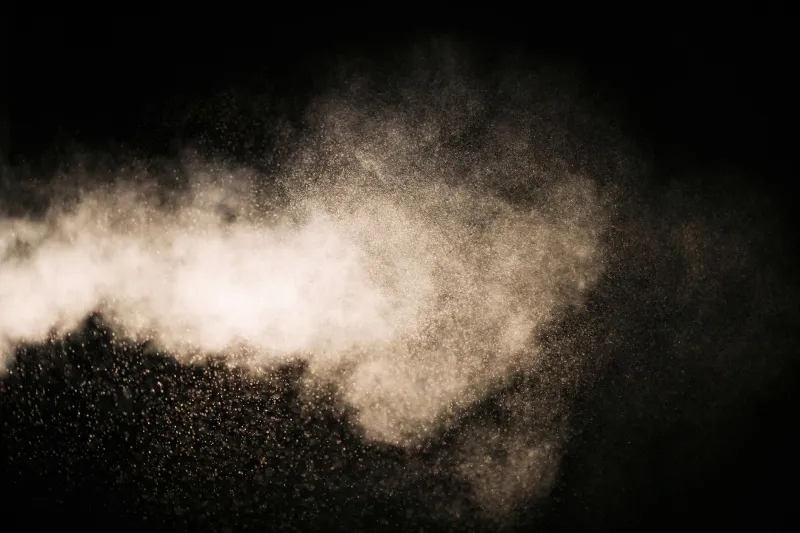
When most people picture Mars dust, they imagine something like the fine, reddish dirt you'd scrape off a desert hiking trail. Maybe a little annoying, sure, but manageable. Wipe it off, move on. That mental picture is almost entirely wrong—and the gap between that assumption and reality is exactly what keeps aerospace engineers up at night.
Martian dust is, in a very real sense, a living threat to any mission that lands on the Red Planet. Not because it's alive, obviously, but because it behaves in ways that feel almost intentionally hostile. Understanding why requires going smaller than you'd expect—down to the scale of individual particles, where the chemistry gets weird and the engineering problems start piling up fast.
It's Not Just Dirt—It's Chemically Aggressive
Earth dust is mostly rounded, weathered particles. Billions of years of wind, water, and biological activity have smoothed them out, chemically neutralized them, and generally made them boring. Mars dust has had none of that luxury.
Because Mars lost its liquid water billions of years ago and never developed significant biological activity, its surface particles never went through the same tumbling, neutralizing process. The result is dust that's jagged at the microscopic scale—think shards of glass rather than grains of sand. Those sharp edges matter enormously when you're talking about mechanical seals, spacesuit joints, and optical surfaces.
Then there's the chemistry. Martian dust contains perchlorates—oxidizing compounds that are essentially toxic to humans at surprisingly low concentrations. Perchlorates interfere with thyroid function, and on Mars they're not a trace contaminant. They're widespread, present in concentrations that would qualify as a serious hazard by EPA standards right here in the US. Any habitat air system that pulls in even a small amount of surface dust is potentially introducing a slow-acting poison.
The iron oxide that gives Mars its signature red color adds another layer of complexity. Some of that iron exists in reactive forms that can oxidize materials on contact—including certain polymers and metals used in spacecraft components. It's not that Martian dust will eat through your rover overnight, but over months and years, the cumulative chemical attack on seals, gaskets, and coatings is very real.
The Electrostatic Problem Nobody Talks About Enough
Here's the part that surprises most people: Martian dust is intensely electrostatic. The Martian atmosphere is about 1% as dense as Earth's, which means there's very little air to bleed off charge. Dust particles pick up static electricity from friction and UV radiation, and without much atmosphere to discharge them, they hold onto that charge.
The practical result? Martian dust doesn't just settle—it actively clings. It sticks to solar panels with a grip that simple brushing can't always overcome. It coats camera lenses and instrument windows. It finds its way into gaps that seem impossibly small. The Mars rovers Spirit and Opportunity both experienced significant power losses as dust accumulated on their solar arrays, and Opportunity ultimately died during a massive dust storm that blocked sunlight for months.
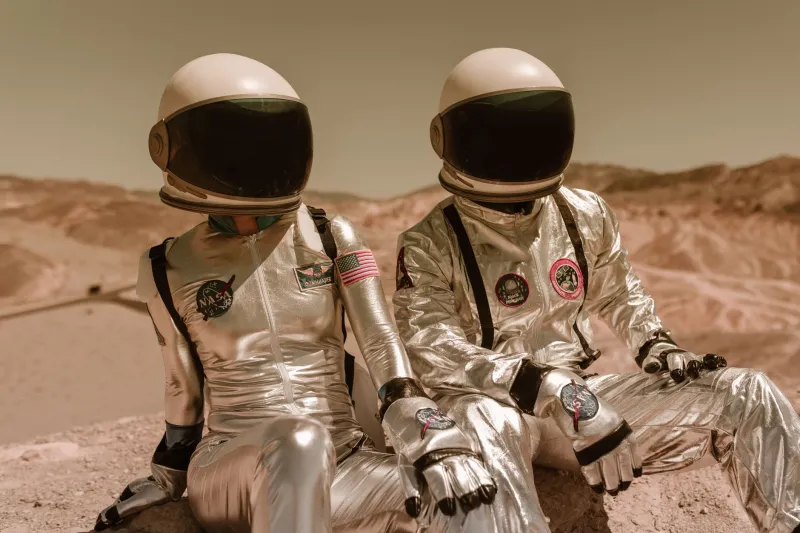
For future crewed missions, this clinging behavior creates a nightmare scenario around airlocks. Every time an astronaut comes back inside, they bring dust with them on their suit. That dust, loaded with perchlorates and sharp-edged particles, becomes an indoor air quality crisis waiting to happen.
What Engineers Are Actually Building to Fight Back
The good news is that the aerospace community has been working on this problem seriously, and some genuinely clever solutions are emerging.
Electrodynamic dust shields are probably the most promising technology on the table right now. The concept is elegant: embed a series of electrodes beneath a transparent or semi-transparent surface, then run alternating electric fields through them. The resulting traveling wave physically lifts dust particles off the surface and moves them to the edges. NASA's Glenn Research Center has been developing this technology for years, and lab tests show it can remove up to 90% of accumulated dust without any moving parts or water. For solar panels and optical instruments on Mars, that's potentially game-changing.
Advanced suit materials are getting serious attention too. Traditional spacesuit fabrics aren't designed for the specific abrasive and chemical properties of Martian regolith. New material research is focusing on coatings that resist perchlorate absorption, weaves tight enough to exclude the finest particles, and joint designs that can flex without creating gaps where dust accumulates. Some researchers are looking at self-cleaning surface treatments inspired by the lotus leaf effect—surfaces so microscopically textured that particles can't get a grip.
Habitat airlock design is being rethought from the ground up. One approach gaining traction is the "suitport" concept, where astronauts essentially back into their suits from inside the habitat rather than suiting up in a shared airlock space. The suit stays outside, attached to the habitat wall, and the astronaut never brings surface contamination indoors. It sounds a little like a science fiction airlock, but the engineering is real and NASA has been testing versions of this idea for years.
Filtration systems for habitat air are being designed with Martian dust specifically in mind—not just particle size, but chemical reactivity. Standard HEPA filtration isn't enough if the particles passing through are oxidizing your filter media. New approaches combine physical filtration with chemical neutralization stages designed to break down perchlorates before they can accumulate to dangerous concentrations.
The Dust Storm Wildcard
All of these solutions get stress-tested against Mars's most dramatic dust feature: planet-scale storms. Every few Martian years, regional dust storms can grow into global events that shroud the entire planet for weeks or months. During these events, the atmosphere loads up with suspended particles that block sunlight, drop temperatures, and coat every exposed surface with fresh deposits when they finally settle.
For solar-powered systems, a global dust storm is an existential threat. For nuclear-powered systems like the Perseverance rover (which uses a radioisotope thermoelectric generator), storms are less immediately dangerous but still pile on dust accumulation problems. Future crewed missions will almost certainly need nuclear power for exactly this reason—you can't bet human lives on solar panels that might get buried under a months-long storm.
There's also the question of dust storm prediction. Right now, we can't reliably forecast when a regional storm will go global. Better atmospheric monitoring from orbital assets is part of the plan, but the science of Martian meteorology is still young enough that surprises are more than possible.
Why This Matters to Anyone Paying Attention
If you're someone who follows Mars exploration closely—and if you're reading Marspedia, you probably are—the dust problem is worth understanding in detail. It's not the most dramatic challenge facing human Mars missions. Radiation gets more headlines. Life support systems sound scarier. But dust is insidious precisely because it's everywhere, always, and it attacks on multiple fronts simultaneously: mechanically, chemically, electrically, and optically.
The engineers working on these solutions are doing genuinely creative work, and a lot of it is happening right now, ahead of missions that are still years away. The solutions being tested in labs in Cleveland and Houston today will determine whether a crewed Mars mission in the 2030s or 2040s is survivable—or whether a microscopic particle, jagged and charged and laced with perchlorates, becomes the thing that ends it.
That's a strange kind of power for something you can barely see.