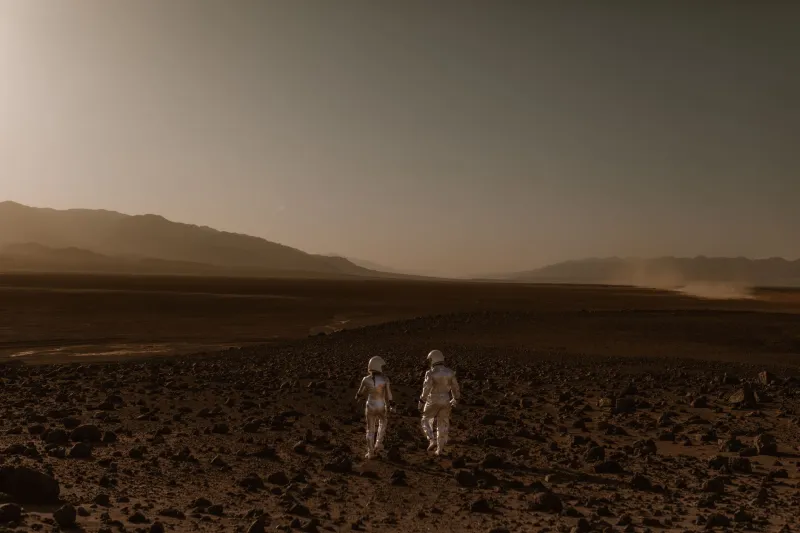
Tick Tock, Wrong Clock: How Mars's Longer Day Will Mess With Human Minds—And What Future Crews Will Do About It

Picture this: you're an engineer on NASA's Curiosity rover team. Your job is to plan the rover's activities for the next Martian day. Simple enough, right? Except Mars doesn't care about your sleep schedule. Its day—called a sol—runs 24 hours and 37 minutes. That's not a huge difference on paper, but string a few weeks together and your internal clock is completely unmoored. You're eating lunch at midnight. You're running team meetings at 3 a.m. You're exhausted in ways that coffee can't fix.
This isn't a hypothetical. It actually happened. And if we're serious about sending humans to Mars, the clock problem is going to get a whole lot more complicated.
What Even Is a Sol?
A sol is simply a Martian solar day—the time it takes for the Sun to return to the same position in the Martian sky. At 24 hours, 39 minutes, and 35.244 seconds (scientists round it to roughly 24 hours 37 minutes for most practical purposes), it's tantalizingly close to an Earth day. Close enough to feel almost normal. Far enough to slowly drive you a little crazy.
For context, that 37-minute drift means that if Day 1 on Mars starts at 8:00 a.m. your Earth time, Day 2 starts at 8:37 a.m., Day 3 at 9:14 a.m., and so on. Within about three weeks, your "morning" has drifted into the middle of the night. Your circadian rhythm—the internal biological clock that governs sleep, hormone release, digestion, and mood—has no idea what's happening.
Astronomers and backyard space enthusiasts who track Mars through a telescope are already familiar with this drift in a different way: Mars's features rotate into view at slightly different Earth times each night, which is part of what makes long-term observing so interesting. But for humans living on Mars, it's not just a scheduling curiosity. It's a genuine health and safety issue.
The Curiosity Experiment in Human Sleep Deprivation
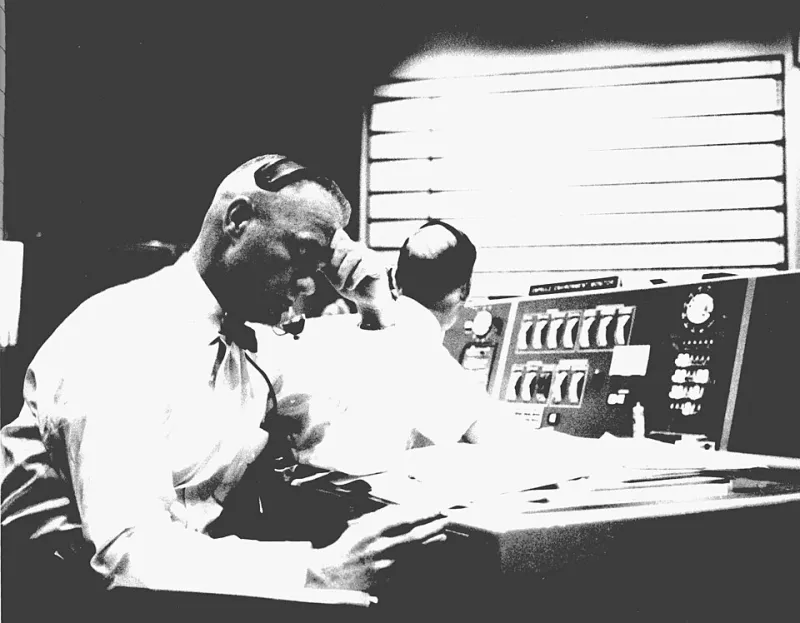
When the Curiosity rover landed in August 2012, NASA's science team made a bold operational decision: they would work on Mars time. That meant syncing their schedules entirely to the sol, shifting their workday by 37 minutes every single Earth day to stay in sync with the rover's activities.
The team wore special watches—custom-built timepieces that ran on Martian time, ticking slightly slower than a standard watch to match the longer sol. It sounds almost charming, like a quirky prop from a sci-fi movie. In practice, it was brutal.
Scientists and engineers reported disrupted sleep, strained relationships with family members who were still on Earth time, and a general fog of fatigue that set in after just a few weeks. Many described it as a kind of perpetual, low-grade jet lag that never fully resolved. The team eventually transitioned off strict Mars time after about three months, partly because the human cost was just too high for a long-term operation.
Now scale that up. A crewed Mars mission isn't three months of rover operations managed from a California control room. It's potentially 500+ days on the Martian surface, with no option to switch back to Earth time when things get hard.
Why Your Body Won't Just "Adjust"
Here's the thing about circadian rhythms: they're not infinitely flexible. Human biology is tuned to a roughly 24-hour cycle, and while people can adapt to modest schedule shifts—think night shift workers or frequent flyers crossing time zones—a permanent 37-minute daily drift is a different beast entirely.
Research on circadian biology suggests that humans can naturally entrain (sync up) to day lengths somewhere in the range of about 23.5 to 24.65 hours. A Martian sol at 24 hours and 37 minutes sits right at the outer edge of that range, maybe just barely within it for some people, maybe just outside it for others. Individual variation matters a lot here.
The stakes go beyond just feeling groggy. Circadian disruption is linked to impaired cognitive performance, weakened immune response, mood disorders, and increased risk of metabolic problems. On a Mars mission, where every crew member needs to be sharp, healthy, and emotionally stable, chronic sleep disruption isn't just uncomfortable—it's a mission risk.
The Communication Delay Makes Everything Worse
Layered on top of the sol problem is the communication delay between Mars and Earth. Depending on where the two planets are in their orbits, signals take anywhere from about 3 minutes to over 22 minutes to travel one way. A back-and-forth conversation takes a minimum of 6 minutes on a good day and nearly 45 minutes when the planets are far apart.
This means Mars crews won't be able to rely on real-time guidance from mission control the way the International Space Station crew can. They'll need to operate with significant autonomy, making time-sensitive decisions on their own. And those decisions will need to be made by people who are already navigating the cognitive fog of a shifted sleep cycle.
Mission planners are increasingly aware that the psychological architecture of a Mars mission—how crews structure their days, mark time, celebrate milestones—needs to be deliberately designed, not just assumed.
So What Are the Solutions?
Engineers and sleep scientists are already working on this. A few of the most promising approaches:
Dedicated Mars timekeeping systems. Just like the custom watches built for the Curiosity team, future crewed missions will almost certainly use purpose-built timekeeping devices calibrated to the sol. Several proposals exist for a formal "Martian Coordinated Time" standard that would give colonists a consistent framework—think of it as the GMT of Mars.
Lighting as a biological cue. Habitat lighting systems could be programmed to mimic a Martian day-night cycle, using light spectrum and intensity to help crew members' bodies entrain to the sol rather than fighting it. Morning light exposure is one of the most powerful tools for resetting circadian rhythms, and smart lighting tech has come a long way.
Flexible scheduling buffers. Rather than trying to force Earth-style rigid schedules onto a Martian day, some researchers advocate for building 37 minutes of intentional flexibility into each sol—a "buffer window" for personal time, decompression, or simply letting the body catch up.
Pharmacological support. Low-dose melatonin and other chronobiotic agents are already used by shift workers and long-haul travelers. Carefully managed sleep protocols using these tools could help crews maintain healthier sleep architecture even as their clocks drift.
The Bigger Picture for Space Enthusiasts
For those of us watching Mars from a backyard telescope or following mission updates from a laptop, the sol problem is a reminder that space exploration isn't just about rockets and radiation suits. It's about the deeply human challenge of living somewhere that doesn't fit our biology.
The engineers solving the Mars clock problem are doing some of the most interesting interdisciplinary work in spaceflight right now—blending chronobiology, psychology, habitat design, and software engineering into something genuinely new. And the solutions they develop won't just help astronauts. Research on circadian disruption has real applications for night shift workers, medical professionals, and anyone who's ever struggled to sleep after a cross-country flight.
Mars has a way of making us rethink things we take for granted. Even something as simple as what time it is.
Want to track Mars's position in the sky and plan your own observing sessions? Check out the gear and star charts available in the Marspedia shop—because understanding Mars starts with actually looking at it.