Opposition Night Playbook: How to Catch Mars at Its Brightest From Your Own Backyard
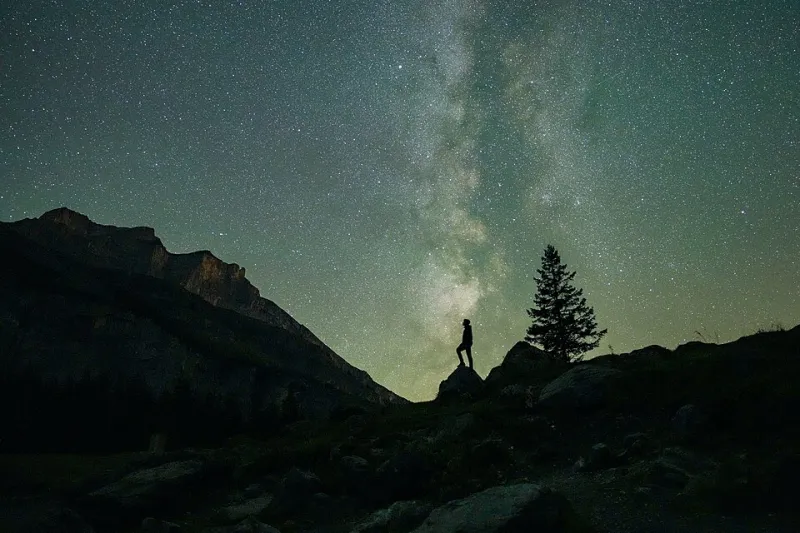
Photo: Giles Laurent, CC BY-SA 4.0, via Wikimedia Commons
Every couple of years, Earth catches up to Mars on the inside track of the solar system, and for a few weeks the Red Planet blazes brighter and bigger in our sky than at any other time. Astronomers call it opposition — Mars rising as the sun sets, staying up all night, and shining close to its maximum brilliance. If you've never deliberately looked at Mars through a telescope, this is the window. Here's your game plan.
What Opposition Actually Means (In Plain English)
Think of Earth and Mars as runners on concentric circular tracks. Earth runs faster on the inside lane and laps Mars roughly every 26 months. When we pull alongside — with the sun directly opposite Mars from our point of view — that's opposition. Mars is at its closest, brightest, and biggest through a telescope.
One quirk worth knowing: because Mars's orbit is noticeably elliptical, some oppositions are better than others. The 2025–2026 season won't match the record-breaking close approach of 2003, but Mars will still be a striking, obviously reddish beacon that outshines most stars around it.
When and Where to Look
Mars during opposition rises in the east around sunset and climbs high by midnight — no pre-dawn alarm clock required. Because it sits opposite the sun, it's roughly opposite the sun's position in the zodiac, which shifts each opposition.
Practical timing tips for US observers:
- East Coast: Mars clears horizon haze and trees within an hour or two of sunset. Prime telescope time is 10 p.m. to 2 a.m. local, when it's highest.
- Central Time: Same deal, just shifted. Late evening through the wee hours is your sweet spot.
- Mountain and Pacific: Mars gets genuinely high in the sky by midnight local time. Desert Southwest observers have a real advantage — dry, stable air means steadier views.
- Everywhere: The weeks surrounding the exact opposition date are nearly as good. Mars stays bright and large for a month or more, so cloudy night? Try again tomorrow.
Download any planetarium app, type in "Mars," and it'll show you exactly where it sits from your zip code.
What You'll Actually See
With the naked eye: A bright, distinctly orange-red point of light that doesn't twinkle like surrounding stars. Once you spot it, you'll wonder how you ever missed it.
With binoculars: Mars stays a dot, but its color pops. Use them to appreciate its position among the constellations — and to wow kids with a "treasure hunt in the sky."
With a telescope (4 inches or larger): This is where it gets good. On nights of steady seeing, you can pick out:
- The polar ice cap — a bright white smudge at one edge of the disk, made of water ice and frozen CO2
- Syrtis Major — a dark, basaltic triangle that 17th-century astronomers drew by hand
- Subtle seasonal changes — dust storms occasionally swallow features whole, sometimes for weeks
Use higher magnification (150x and up) and be patient. Mars is small, and your eyes need time. A colored filter, especially red or orange, darkens the contrast and brings out detail.
Make It a Party
Opposition is the perfect excuse for a sidewalk astronomy night. A few ideas that work:
- Invite the neighbors. Nothing recruits a new astronomy fan like a first live view of another planet.
- Contact your local astronomy club. Most clubs host public star parties during opposition season, and club members' big scopes show details your starter telescope can't.
- Give kids a job. Have them sketch what they see through the eyepiece — it's exactly what early Mars observers did, and it sharpens their attention.
- Serve themed snacks. Red Velvet anything. We don't make the rules.
A Rare Rhythm
Here's the thing about Mars oppositions: miss this one, and the next is more than two years away. That's the rhythm of the solar system — patient, predictable, and worth showing up for. Set a reminder, charge your phone for photos through the eyepiece, and go meet the Red Planet face to face.