Suit Up: 15 Pieces of Mars Gear That Belong in Every Red Planet Fan's Collection
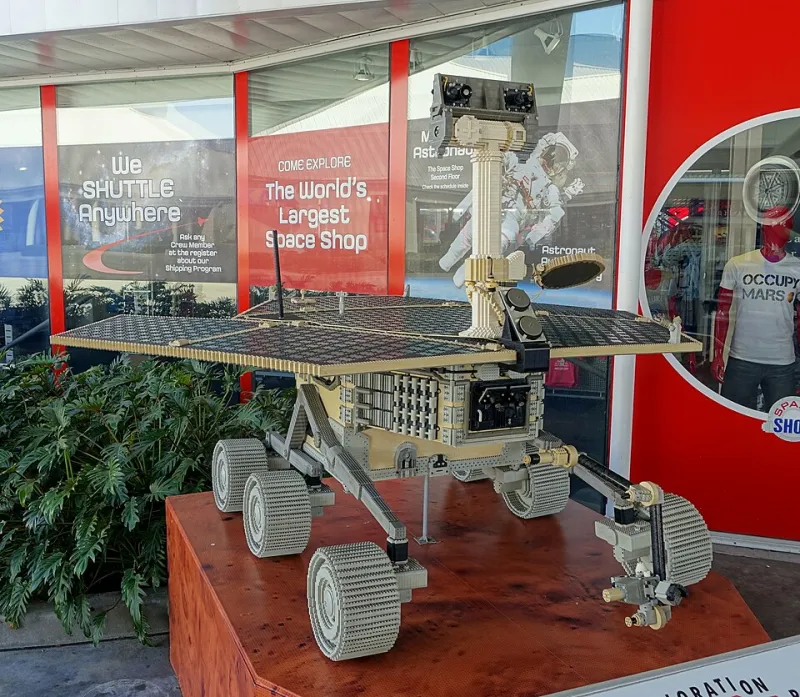
Photo: Daderot, CC0, via Wikimedia Commons
Let's be honest — being a Mars fan in 2026 is a golden-era situation. Rovers are still rolling, Starship prototypes keep (sometimes) flying, and opposition season puts the Red Planet front and center in our evening skies. Whether you're shopping for yourself or hunting for the perfect gift for the space nerd in your life, we've rounded up 15 items that earn their spot on any Mars lover's shelf. Each one connects back to the actual science — because gear is more fun when you know why it matters.
Start With the Optics: Telescopes That Do Mars Justice
1. A 6- to 8-inch Dobsonian reflector. If Mars viewing is the goal, aperture is king. A Dob in this range resolves surface features like Syrtis Major and the polar cap on steady nights, often for under $500. It's the workhorse recommendation for a reason.
2. A quality set of color filters. Here's a pro tip most beginners miss: planetary filters (especially a red or orange one) boost contrast on Mars dramatically. They mimic, in a tiny way, what orbiters do with multispectral imaging to map Martian geology.
3. Binoculars you already own — upgraded with a tripod. Mars won't show detail in binoculars, but pairing them with a star app to spot the planet's salmon-colored glow is a genuinely great first-look experience for kids.
Wear the Mission
4. Flight-suit style jackets. The orange NASA-inspired flight suit has become the unofficial uniform of space fandom. Bonus points if you can explain to party guests why real Mars suits will likely be white — spoiler: thermal control and dust visibility.
5. Mission patch collections. Every Mars mission since Mariner 4 has had its own emblem, and collecting patches is the cheapest way to own a piece of spaceflight history.
6. A pressure-group tee with a sense of humor. "I'd tell you a Mars joke, but the atmosphere is too thin." We've seen worse. Science puns are a gateway drug to actual science conversations.
Build It Yourself: Models and Kits
7. A Perseverance rover model kit. Building a 1:20 scale rover teaches you the machine's anatomy — the mast, the robotic arm, the MOXIE oxygen experiment. Assembly is basically a crash course in mission design.
8. An Ingenuity helicopter kit. The first powered flight on another world deserves shelf space. The real rotor blades span about four feet because Martian air is 1% the density of Earth's — a fact that makes the model way more interesting.
9. A Mars globe with real terrain mapping. Skip the smooth novelty globes and find one based on MOLA laser altimetry data, complete with Olympus Mons bulging off the surface.
10. A meteorite fragment (certified). Yes, you can legally own a piece of Mars. NWA meteorites classified as Martian shergottites show up at reputable dealers with documentation. It's the ultimate collector's item.
Learn the Science
11. A current Mars atlas or surface map poster. The USGS publishes gorgeous geologic maps of Mars. Framed, they're wall art; unfolded, they're a reference tool for planning your own observing sessions.
12. A subscription to a planetary science magazine or journal digest. Mars news moves fast. Staying current means your trivia game stays undefeated.
13. The classic Mars mission books. Anything covering the Viking era through Curiosity gives you the full narrative arc of how we learned what we know.
Live the Lifestyle
14. A planetarium app with a Mars tracking mode. Knowing exactly when Mars rises over your backyard in Arizona or Maine turns casual stargazing into a habit.
15. A dust-storm-grade telescope cover. Okay, this one's practical rather than poetic — but if you're investing in optics, protect them. Mars fans know better than anyone what abrasive dust does to machinery.
The Common Thread
Notice a pattern? The best Mars gear doesn't just look cool — it teaches something. A rover kit is a lesson in robotics. A telescope is a portal to real-time planetary science happening 140 million miles away. When you shop with the science in mind, your collection becomes a curriculum.
And when Mars hits opposition this season, you'll be ready — geared up, patched up, and pointed at the sky.