Your Brain on Mars: The Memory Crisis No One Is Talking About
Everybody loves talking about the rocket fuel, the habitat modules, the food supply. But there's a quieter, weirder problem lurking inside every Mars mission plan — one that doesn't involve hardware at all. It lives between your ears.
Scientists and mission planners are increasingly worried that by the time astronauts actually set foot on the Martian surface, their brains may already be working differently than they did on Earth. Not dramatically, not like a sci-fi movie. Subtly. In ways that could affect judgment, emotional stability, and — here's the part that keeps researchers up at night — memory itself.
The Three-Headed Monster Attacking Astronaut Brains
Think of it as a triple threat. Any one of these factors alone would be manageable. Together, they create something researchers are only beginning to fully understand.
Cosmic radiation is the first culprit. Once you leave the protective bubble of Earth's magnetosphere, you're exposed to galactic cosmic rays — high-energy particles that can physically damage brain tissue. NASA-funded studies on rodents have shown that exposure to simulated deep-space radiation caused measurable impairment in spatial memory and a dramatic increase in anxiety-like behaviors. The hippocampus, which is essentially your brain's filing system for new memories, appears particularly vulnerable. A round trip to Mars takes somewhere between 18 months and three years depending on mission architecture. That's a long time to be getting pelted.
Isolation and sensory monotony are the second problem. The human brain is a prediction machine. It runs on novelty, social interaction, and environmental variety. Strip those away — which a cramped spacecraft or an early Mars habitat absolutely will — and cognitive performance starts to drift. Research from Antarctic winter-over crews and submarine missions (two of the closest Earth-based analogs we have) consistently shows degraded memory consolidation, slower processing speed, and a flattening of emotional response after extended isolation. Antarctica is cold and remote, but at least you can look up and see the same sky as everyone back home.
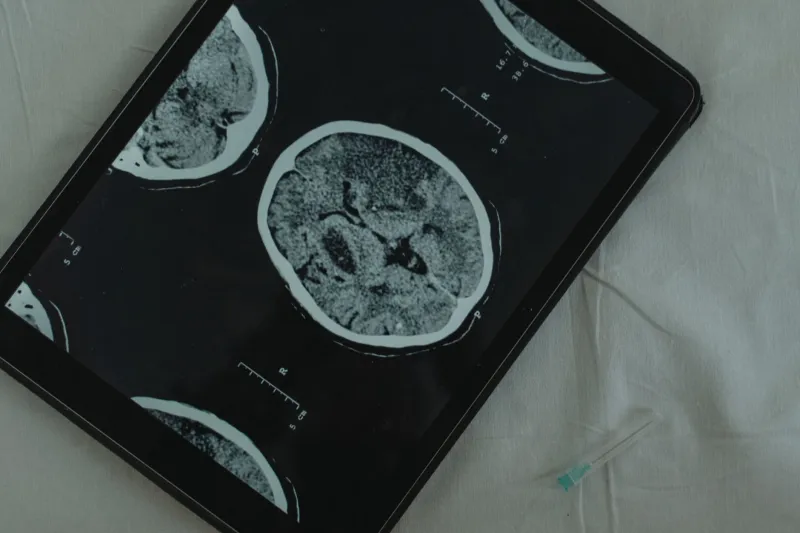
Altered gravity rounds out the trio. We know microgravity during the transit phase causes fluid shifts toward the head, which can increase intracranial pressure and subtly compress optic nerves. Some astronauts returning from the International Space Station have shown structural changes in their brains on MRI scans. Mars gravity is about 38% of Earth's — better than zero, but still an unknown variable for long-term neurological health.
The Emotional Memory Angle Nobody Talks About
Here's where things get genuinely poignant. Memory isn't just about facts and procedures. It's about people, places, and feelings. Neuroscientists distinguish between episodic memory — your personal history, your sense of who you are — and the emotional texture that makes those memories feel real and meaningful.
Researchers studying long-duration isolation have noticed something troubling: over time, emotionally significant memories from before the mission start to feel distant. Not forgotten exactly, but muted. Like watching a home video with the sound turned down. Psychologists call this "affective flattening," and it's been documented in people returning from six-month Antarctic deployments.
Now stretch that timeline to two or three years, add radiation exposure, and you've got a scenario where an astronaut might intellectually know they love their family back in Ohio but struggle to feel that love with the same vividness they once did. That's not a small thing. It has implications for mental health, for decision-making under stress, and for the social cohesion of a small crew living in very close quarters.
What NASA and Its Partners Are Actually Doing
The good news is that this isn't being ignored. The bad news is that solutions are still pretty early-stage.
NASA's Human Research Program has been funding neuroscience research specifically targeting cognitive countermeasures for deep-space missions. Some of the approaches being explored include:
- Structured cognitive training — essentially brain exercise programs that target memory consolidation and attention, designed to be done during transit. Think of it like physical therapy for your hippocampus.
- Pharmacological interventions — certain drugs have shown promise in protecting against radiation-induced cognitive decline in animal models, though human trials are ongoing and cautious.
- Virtual reality anchoring — one of the more creative approaches involves using immersive VR environments to help astronauts maintain emotional connections to Earth. Imagine putting on a headset and spending 20 minutes "walking" through your neighborhood in suburban Chicago, or sitting at your kitchen table with a photorealistic version of your family. Early psychological research suggests this kind of environmental anchoring can help preserve the emotional vividness of memories.
- Sleep optimization protocols — sleep is when memory consolidation actually happens, and astronauts notoriously sleep poorly in space. Getting sleep right turns out to be one of the highest-leverage interventions available.
The European Space Agency has also been running Mars analog simulations — including the MARS-500 study, which locked six crew members in a Moscow facility for 520 days — and the psychological data from those missions continues to inform countermeasure development.
What This Means for Future Colonists
Here's where the stakes really escalate. A mission crew coming home after two years can be debriefed, treated, and reintegrated into Earth life. But what about permanent colonists? What about the people who go to Mars and never come back?
For them, the memory problem isn't a temporary side effect — it's a permanent condition of their new lives. Their children, if they have them on Mars, will grow up never having been to Earth at all. The emotional and cognitive architecture that evolution built for life on this planet will be running in an environment it was never designed for.
Some researchers argue this is actually an argument for aggressive neuroscience investment now, before we commit to permanent settlement. Others suggest that humans are adaptable enough that Martian-born generations will simply develop differently — not worse, just different, optimized for their world rather than ours.
It's a genuinely open question, and the answer matters enormously for how we think about Mars policy, crew selection, and the ethical responsibilities we have toward the people brave enough to make that journey.
The Bigger Picture
If you're the kind of person who tracks Mars news, follows mission timelines, and maybe has a telescope in your backyard, this stuff matters to you even if you're never getting on a spacecraft. The decisions being made right now — about how much neuroscience research gets funded, how mission durations get structured, what psychological support systems get built — are being shaped in part by public awareness and political will.
The brain is the last frontier of Mars mission planning, and it deserves as much attention as the rocket engines. Because you can build the perfect spacecraft and still send broken people to Mars if you don't figure this out first.
And broken people, 140 million miles from home, with no quick way back — that's a problem no amount of great engineering can fix.